In Vienna, sitting is a position. You choose your coffee house the way you might choose a side in a debate — by temperament, by light, by the angle of the newspapers on their wooden rods. We spent three mornings at Café Sperl, where the marble tables carry a century of ring-stains and the waiters move with a formality that feels less like service than choreography. Nobody rushed us. The Einspänner arrived under its cap of cream, and we understood that this was not a drink but a unit of time. A man at the next table read Die Presse for the better part of an hour, folding each page with surgical care back onto its wooden rod before drawing the next. The coffee went cold. He ordered another without looking up. This, we gathered, was the correct protocol.
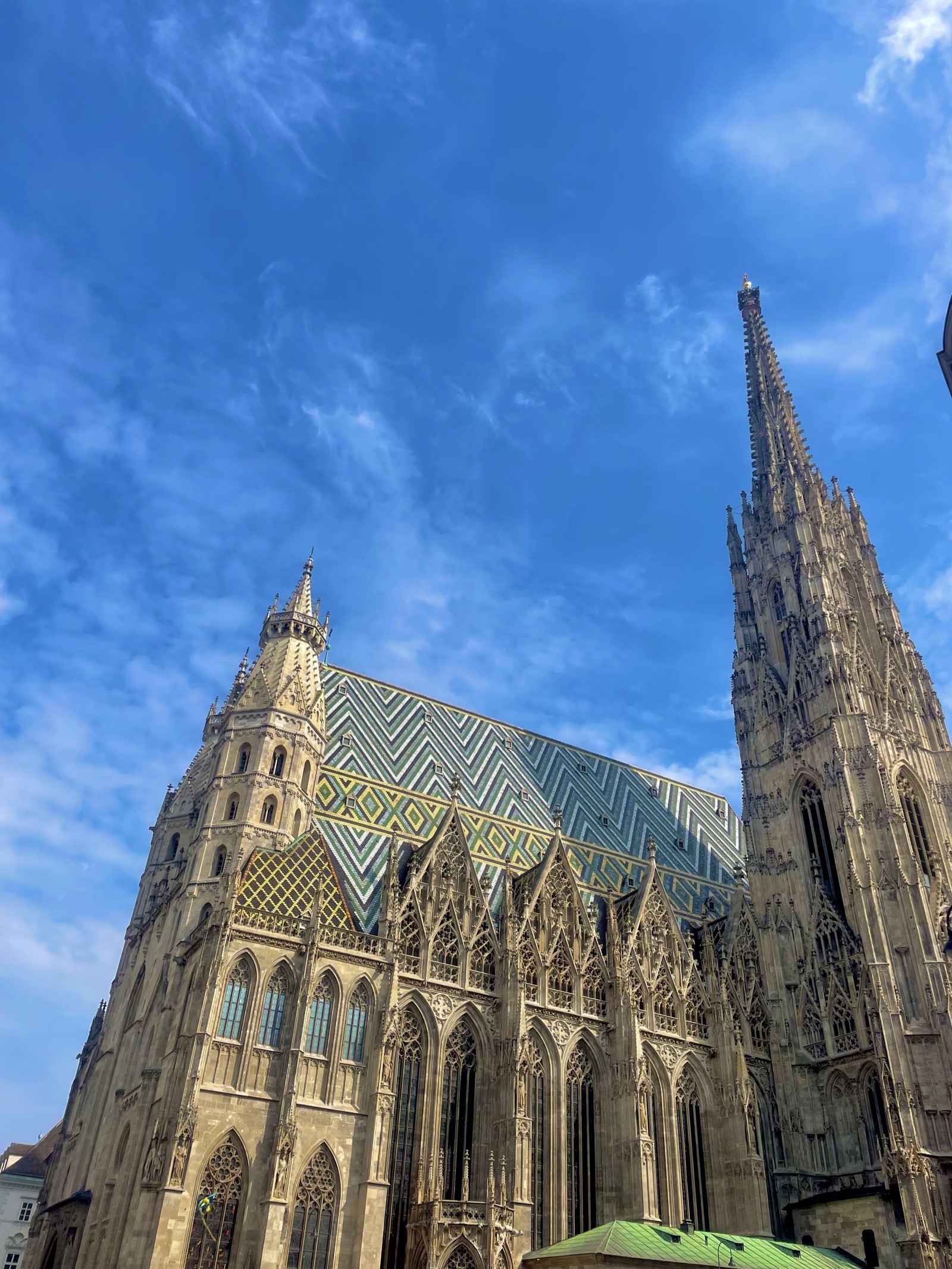
The city argues with itself in stone. The Secession building sits like a white dare across from the Naschmarkt's iron stalls, its golden dome of laurel leaves catching light that the surrounding Gründerzeit facades refuse. We walked the MuseumsQuartier at dusk, when the limestone turns the colour of weak tea, and watched skateboarders carve lines across Leopold Museum's forecourt while a string quartet rehearsed something by Schubert through an open window above. Vienna's grandeur is real, but it is the friction between periods — Baroque against Jugendstil, Habsburg bulk against Otto Wagner's clean nerve — that gives the place its particular tension. Even the Ringstrasse, that grand circular boulevard built to replace the medieval walls, can't decide what it wants to be: opera house, parliament, university, and church sharing the same address without agreeing on a single architectural language.
Austria does not try to charm you. It just does things well and lets you notice when you are ready.
The Naschmarkt earns its own morning. We walked the length of it twice — once to look, once to eat — past stalls selling olives in brine the colour of jade, smoked paprika in paper cones, and Käsekrainer sausages split and grilled until the cheese inside ran. A vendor selling Turkish flatbreads tore one open for us, steam rising into the April air, and waved away any discussion of payment until we'd tasted it. Lunch was at Steirereck in the Stadtpark, where the dining room looks onto lawns and the cooking carries the same measured seriousness as the architecture outside — each plate arranged as if the chef had used a ruler.
An hour west by train, the Danube enters the Wachau and the argument quiets. The river bends between terraced vineyards so steep that harvest is still done by hand, the grapes carried down in hods. We stayed in Dürnstein, where the apricot trees were finishing their bloom and the ruined castle above town held nothing but swallows and a view that stretched to the next bend. The village itself is barely more than a single street — pale stone houses, a blue Baroque church tower, and a Heuriger at the far end where locals drank the new vintage from thick-stemmed glasses and ate cold cuts on wooden boards. At Domäne Wachau, we tasted a Grüner Veltliner so mineral it seemed to carry the schist of the hillside in each sip. The winemaker spoke about soil the way Viennese architects speak about proportion — as though the whole enterprise depended on getting the foundation right.
What stays is the precision. A Sachertorte at Demel, cut with the geometric seriousness of a building plan. The way a tram rounds Ringstrasse on a schedule it has kept since 1897. A woman in the Wachau folding nets over her vines before a rain that had not yet arrived, her movements practised enough to suggest she'd been reading this sky for fifty vintages. On the train back to Vienna, the Danube ran grey-green beside the tracks and the terraces climbed the hillside in rows so orderly they looked ruled. Austria does not try to charm you. It just does things well and lets you notice when you are ready.