The Tour du Mont Blanc may not be the most remote trail, nor the most difficult, but it might be the most complete — a ten-day argument that walking is the only honest speed for understanding a landscape. 170 kilometres through three countries, ten thousand metres of accumulated ascent, and a peak that watches you the entire time like a host who never sits down. The trail was first walked as a continuous route in the eighteenth century, when Romantic poets decided that mountains were worth looking at rather than avoiding, and it retains something of that original impulse — every turn in the path seems composed, as though the landscape had been arranged for the benefit of someone arriving on foot.
We started in Les Houches on a Tuesday in September, which is the TMB's secret season — the August crowds have returned to their offices, the refuges are half-full, and the larch trees are beginning to turn gold. The first col, the Col de Voza, is a gentle introduction. The trail is wide, the views are instructive, and your pack feels reasonable. Enjoy this. It is the last time anything will feel reasonable for ten days. The descent to Les Contamines passes through alpine meadows where the cowbells have a pitch so specific to this valley that farmers can identify individual animals by sound. We stopped at a fromagerie and bought a round of Beaufort still warm from the press — dense, nutty, the colour of butter left in the sun — and ate it on a stone wall while the Dômes de Miage turned pink in the evening light.
The TMB does not end with a sense of achievement. It ends with a sense of proportion.
Italy arrives on day three, through the Grand Col Ferret, and it arrives the way Italy always does — with better food. The Rifugio Bonatti, perched on a balcony above the Val Ferret with the Grandes Jorasses filling the window, serves a four-course dinner with wine. You eat in hiking boots beside people who walked eight hours to get here, and the sommelier — yes, there is a sommelier at 2,000 metres — recommends a Morgex from vines grown on the highest terraces in Europe. In Courmayeur, the Italian base town, we spent a rest day eating pizza at a table overlooking the Mont Blanc tunnel entrance, watching trucks disappear into the mountain on the French side and emerge minutes later into Italian sunlight. The gelato shops outnumbered the outdoor gear shops. Italy knows its priorities.
Switzerland, between Champex and Trient, is quieter. The trail narrows. The forest thickens. The Fenêtre d'Arpette variation, a boulder-strewn col at 2,665 metres that the guidebook calls 'challenging' and we would call 'vertical,' offers a view of the Trient glacier that is worth every oath you muttered on the way up. The glacier is retreating. We could see the line where it was ten years ago, a pale scar on the rock where ice once pressed. A trail teaches you many things. This one teaches you that the mountain is not permanent. The Swiss section is also where the trail's economy shifts — the refuges are more expensive, the portions slightly smaller, the efficiency slightly higher. You cross a border and the croissants become more precise.
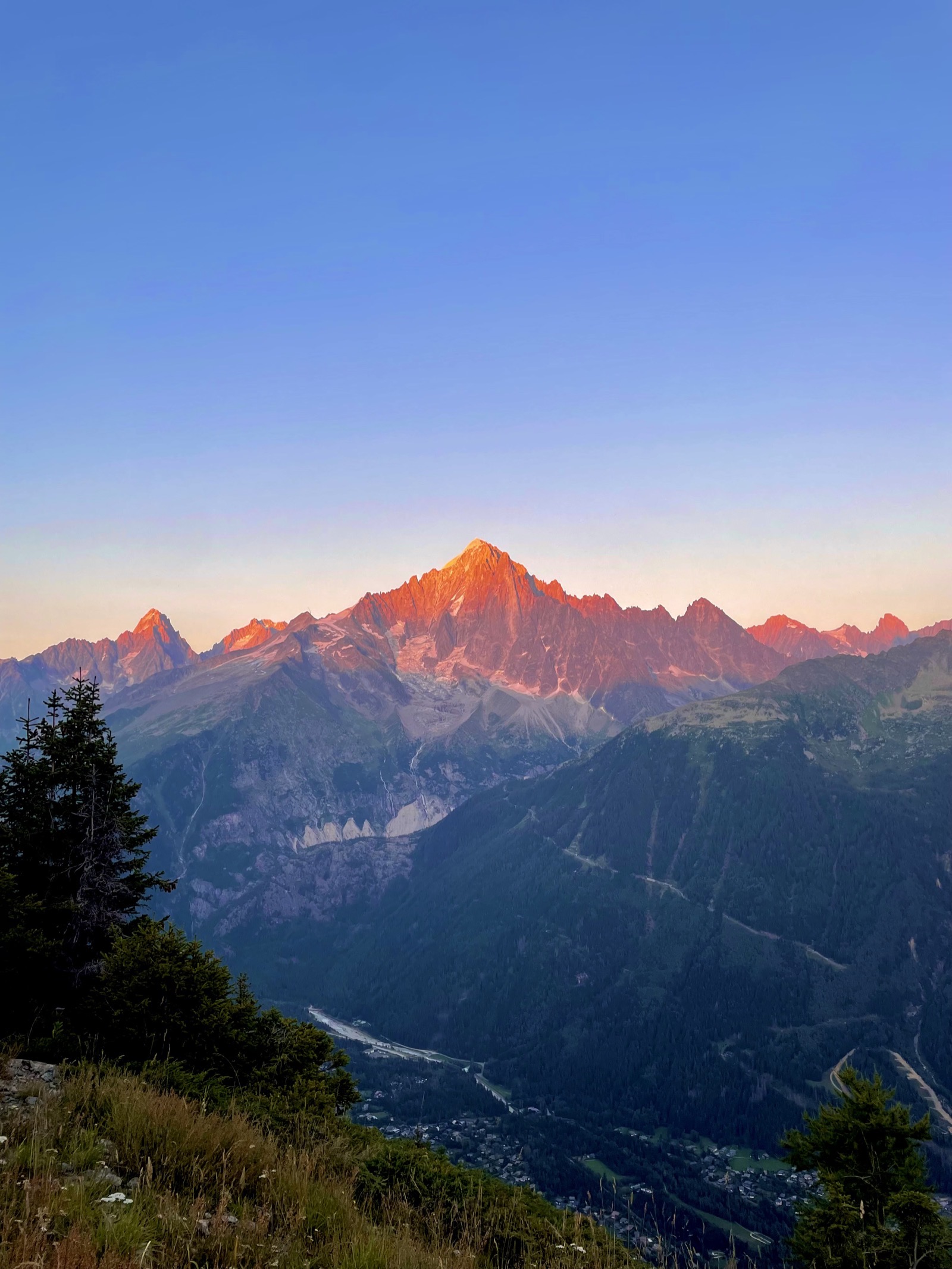
The return to France through the Col de la Balme is a homecoming. The trail from the Lac Blanc refuge, with the entire Mont Blanc massif reflected in water so still it seemed like a technical error, is the finest single view on the circuit — and possibly the finest earned view in the Alps. The final descent into Chamonix, with the Aiguilles catching the late afternoon light and the town materialising below like a reward, is the best last day of any long trail we've walked. We arrived at five, ordered a beer on a terrace facing the Bossons glacier, and said nothing for a long time. The TMB does not end with a sense of achievement. It ends with a sense of proportion.