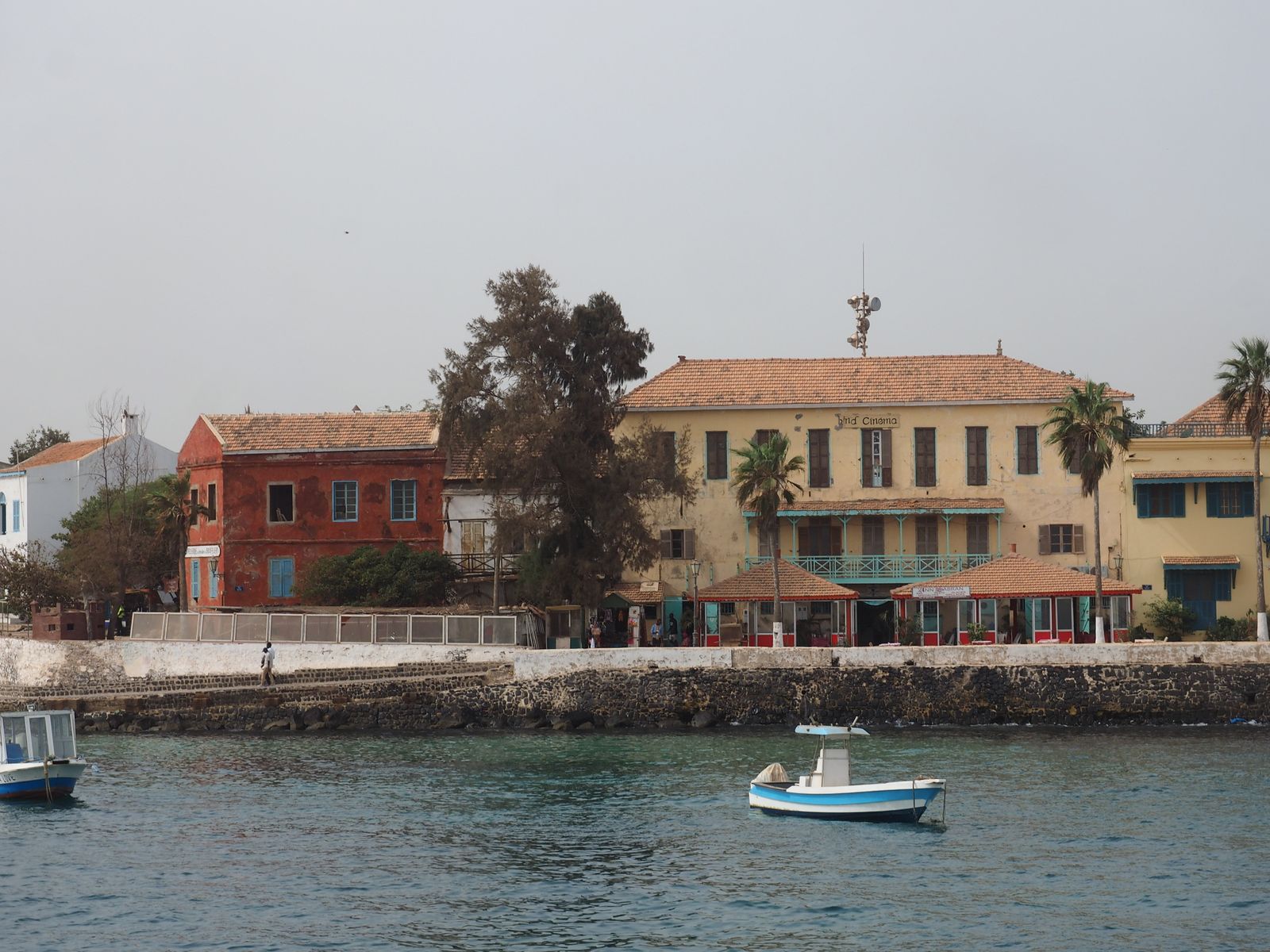
Gorée Island is a twenty-minute ferry from Dakar and four centuries removed from comfort. The crossing itself sets the tone — the ferry pulls away from the terminal into a harbour where pirogues painted in the colours of Senegalese football clubs knock against one another, and within minutes the noise of the city drops to a hum, then to nothing. The Door of No Return, at the back of the Maison des Esclaves, frames nothing but ocean — the last threshold for millions of enslaved people before the Middle Passage. Our guide, a man named Ousmane whose family has lived on Gorée for five generations, didn't lower his voice for our benefit or raise it for effect. He simply told the history precisely, the way you'd want the worst chapters told, without theatre and without flinching.
The island above the memorial is almost unbearably beautiful, which is its own kind of discomfort worth sitting with — bougainvillea over ochre walls, no cars, fishermen mending nets on a beach a hundred metres from where the House of Slaves still stands. Children played football in a sandy courtyard between colonial-era buildings whose shutters had been painted blue and then left to the salt air. A woman sold baobab juice from a cooler at the entrance to a lane so narrow two people couldn't pass without turning sideways. Gorée doesn't resolve that tension for you. It leaves the beauty and the history in the same frame and trusts you to hold both.
Gorée doesn't resolve that tension for you. It leaves the beauty and the history in the same frame and trusts you to hold both.
Dakar itself runs on a different frequency than anywhere else we'd been in West Africa — Mbalax music from every third doorway, an art scene centred on the Dakar Biennale that has real international weight, and a fashion culture where the boubou is styled with the same seriousness Paris gives a runway. The Corniche road traces the coast past surfers and open-air gyms built from rebar and determination, past the African Renaissance Monument standing on a volcanic headland with a confidence that matches the city's own. We spent an evening at a live music venue in the Médina neighbourhood where a Mbalax band played until 3 AM and nobody, including the eighty-year-old woman two tables over, sat still for more than a song.
The Marché Sandaga is chaos organised by a logic we never fully cracked — fabric vendors stacked three deep, a man selling nothing but phone chargers and Senegalese flags, the smell of thiéboudienne, the national dish, drifting from a dozen unmarked kitchens. We ate it at a plastic table behind the market from a woman who ladled rice and fish from a pot the size of a bathtub and refused, twice, to let us pay more than the local price. Later that week we tried yassa poulet at a gargote in the Ouakam neighbourhood, the chicken marinated in enough lemon and onion to make our eyes water from across the table, and understood that Senegalese cooking is not shy about flavour or about portion size.
On our last day we drove north to Lac Rose, where the water turns the colour of diluted hibiscus when the salt content and the afternoon sun align. Men stood waist-deep, scraping salt from the lake floor into pirogues, their skin coated in shea butter against the brine. The pink was subtler than the photographs suggest — closer to a faded rose than to the electric shade that travels well on screens — but the scale of the operation, hundreds of workers harvesting salt by hand from a lake barely a metre deep, was more striking than any colour could be.
Senegal doesn't ask you to look away from its hardest history to enjoy its present. It asks you to hold both, on the same ferry ride, in the same afternoon — which is, we came to think, a more honest way to travel than most countries offer.