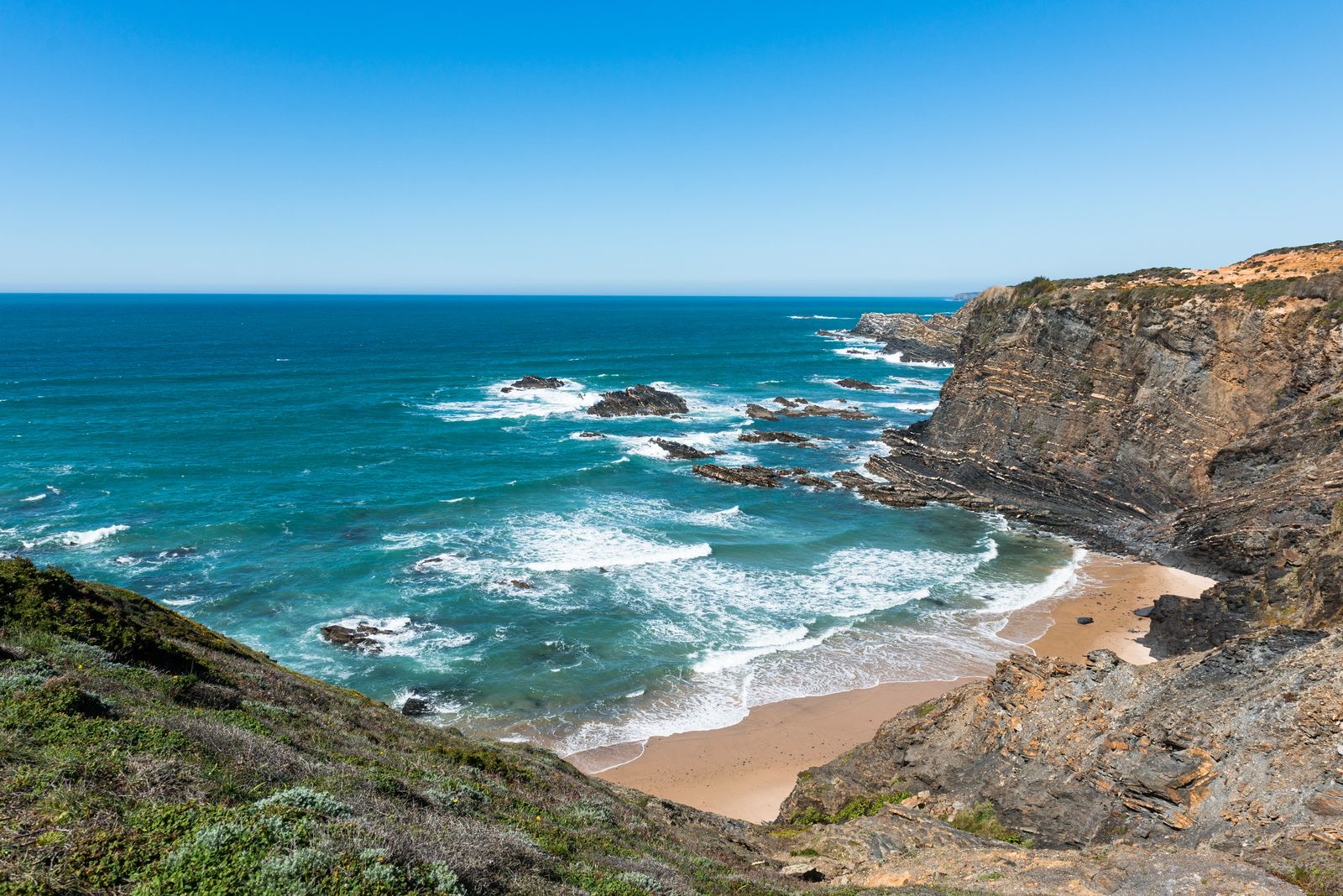
The cliffs along the Alentejo are layered ochre and rust, dropping into water that shifts from turquoise to navy with the cloud cover, and the road behind the beach leads to a village of two hundred people and a restaurant that closes when the fish runs out. There is no boardwalk. There is no parking structure. There is a dirt path, and at the end of it, sand.
The Rota Vicentina, a 450-kilometre trail along the southwestern edge of Europe, is one of the best walks on the continent and one of the least known. We did the Fishermen's Trail section — four days of cliff-top paths, empty beaches, and a wind that never stopped. The trail follows the actual routes that fishermen used to reach their casting spots on the rocks below, which means it dips and climbs with a logic that is practical rather than scenic, though the result is scenic anyway. The guesthouses along the route are family-run, the meals are enormous, and the wine is from vines growing in sand. One host, Maria, insisted we try her homemade aguardente after dinner. It was rough, honest, and exactly what four hours of walking into a headwind had earned.
Portugal is the easiest country in Europe to love. The Alentejo is the reason.
Porto Covo is a village of white houses and blue trim where the biggest decision of the day is which rock to sit on. We ate grilled sardines at a plastic table by the harbour and watched the fishing boats return with the afternoon catch. The bill was eleven euros for two, including wine. The sardines had been swimming three hours earlier, and the difference between that and anything you'll eat in Lisbon is the difference between a live performance and a recording. An old man at the next table filleted his fish with a pocket knife and a concentration that suggested this was the most important task of his afternoon. It probably was.
Inland, the Alentejo is cork oaks and wheat fields and a heat that makes everything slow. The towns — Evora, Monsaraz, Marvao — sit on hilltops like sentences at the top of a page, waiting to be read. Each one has a castle, a church, and a cafe where the espresso costs sixty cents and the view is from the 12th century. Evora's Roman temple stands in the middle of town as casually as a bus stop, and the Chapel of Bones — walls lined with the skulls and femurs of five thousand monks — comes with a doorway inscription that translates roughly as: we bones, here, await yours. The Portuguese have a relationship with mortality that is both morbid and practical, and this chapel is its clearest expression.
We stayed at Sao Lourenco do Barrocal outside Monsaraz, a 780-hectare estate turned into a hotel that understood renovation means keeping more than you change. The walls are original. The olive grove is original. The swimming pool is not, but it sits in the landscape as if it were. The dinner menu changes with whatever the farm produces that week — lamb, tomatoes, herbs that grow between the stones. We ate outside under a sky that smelled of warm grass and rosemary, and the nearest artificial light was the village of Monsaraz on its hill, glowing faintly like a lantern someone had forgotten to turn off.
Portugal is the easiest country in Europe to love, and the Alentejo is the reason. Not because it tries to impress — it does the opposite, offering so little in the way of spectacle that you're forced to pay attention to what's actually there. The light. The stone. The sound of a cork oak's bark being stripped in summer, a clean tearing sound that the harvesters make look effortless after decades of practice. The Alentejo just sits there, doing nothing in particular, and somehow that is enough.