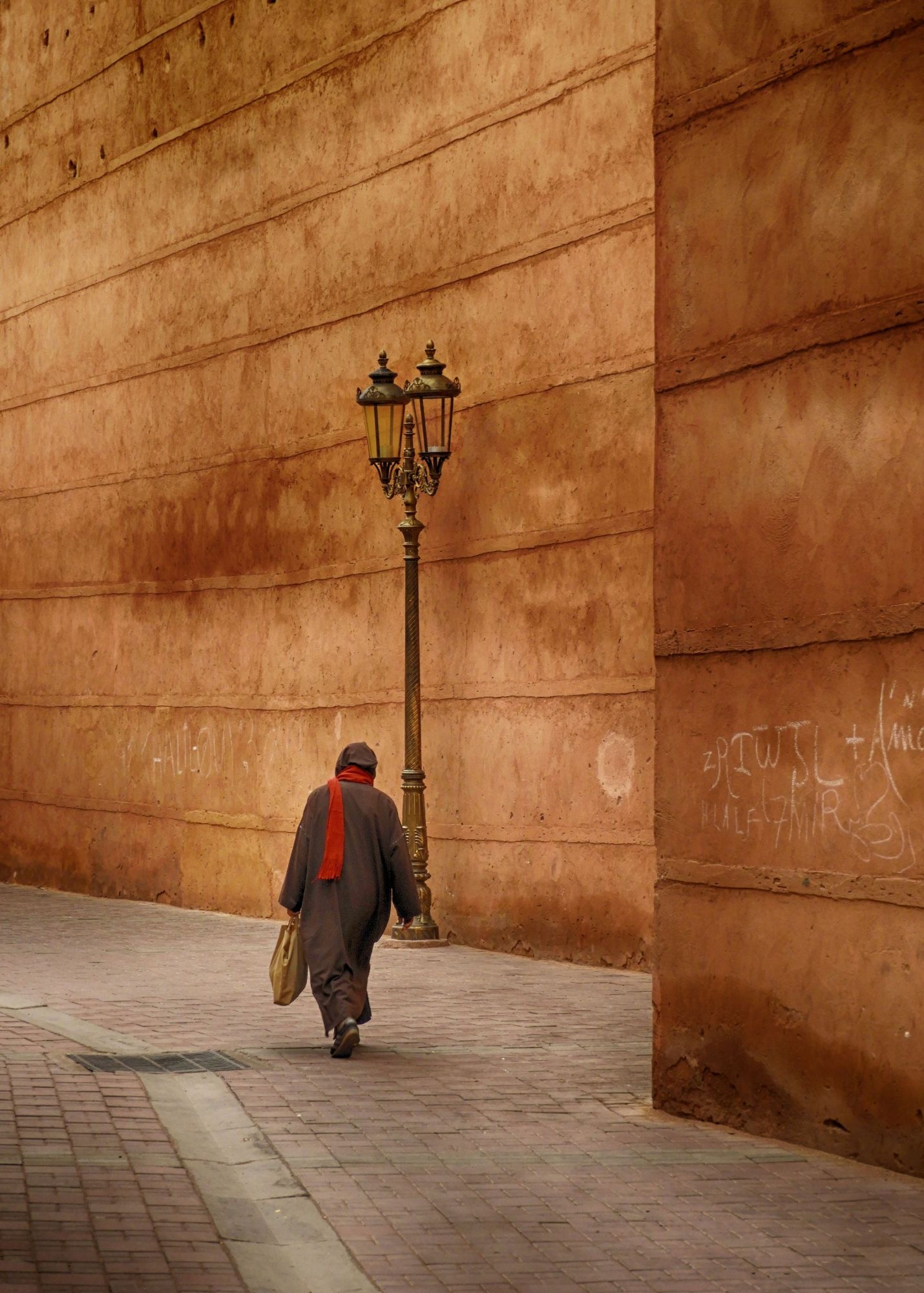
The medina at 4 AM belongs to the bakers. We followed the smell of bread through the Marrakech dark, past shuttered stalls and sleeping cats, to a communal oven where a man was pulling flatbreads from a clay floor with hands that had clearly been doing this since before we were born. He handed us one without asking if we wanted it. The bread was hot, the crust singed in patches, and it tasted of woodsmoke and the particular generosity of someone who feeds strangers at an hour when most people are asleep.
The Jemaa el-Fnaa is the square that defines Marrakech, and it changes identity every few hours. In the morning it belongs to orange juice vendors, their carts stacked with pyramids of fruit so precisely arranged they look architectural. By noon the snake charmers arrive, and with them the men who will put a monkey on your shoulder before you can object. By evening the smoke rises from a hundred food stalls and the square becomes the largest open-air restaurant in Africa, and the noise achieves a density that makes conversation a physical effort.
Morocco happens to you before you have time to visit it.
We stayed in a riad in the Mouassine quarter, a traditional house built around a courtyard with a fountain and a lemon tree and four floors of rooms that opened onto a central sky. The owner, a Frenchman who had moved here twenty years ago and stayed, explained the logic of medina architecture: every house turns its beauty inward. The street-facing wall is blank, windowless, deliberately plain. The life is inside. It is an approach to domestic space that reverses everything Western architecture assumes about display.
The souks are designed to get you lost. We hired a guide for the first day and fired him by the second, because the souks reward confusion more than efficiency. Each alley specialises: leather here, metalwork there, spices in a corridor so narrow that two people cannot pass without one pressing against the wall. A cobbler made us sandals in forty minutes from a piece of leather he selected by smell. When we asked how he chose that piece, he said: the good ones speak. He was not being metaphorical.
The drive over the Atlas Mountains to the Sahara took ten hours and crossed a pass at 2,260 metres where the landscape changed from green to red in the space of a single switchback. On the southern side, the kasbahs began — fortified villages built from rammed earth that is the exact colour of the ground they stand on, as though the buildings grew from the desert rather than being built on it. Aït Benhaddou, the most famous, has been a UNESCO site and a film set for decades, but the family that still lives in the upper quarter treats both distinctions with equal indifference.
The Sahara arrived at dusk on the third day. We drove to the edge of the erg at Merzouga and transferred to camels, which moved toward the dunes with the patient gait of animals that have been doing this longer than cars have existed. The camp was three tents, a fire, and a sky with more stars than we had ever seen. A Berber guide named Hassan played the guembri — a three-stringed bass lute — and the sound carried across the sand in a way that made the desert seem smaller and more inhabited than it was.
We slept in the desert and woke to a silence so complete that our own breathing sounded intrusive. The sunrise turned the dunes orange, then pink, then a gold that lasted exactly six minutes before the sand returned to its daytime beige. Hassan brought mint tea and bread and said: this is how every day starts here. The same light, the same tea. He said it the way you'd say the sky is blue. Not a complaint. Not a boast. Just the way things are.