We are writing this from a table set between the road and a sugar cane field, somewhere south of Souillac. The light here does something we have not seen elsewhere — it arrives sideways off the Indian Ocean and turns the cane into rows of pale fire. The geometry of the fields is extraordinary — clean diagonals running to the coast, interrupted only by basalt boulders too heavy to move and the occasional flamboyant tree spreading its red canopy like an umbrella opened against the wrong weather. This is not the Mauritius of the resort brochures, with their overwater bungalows and turquoise infinity. This is the working island, where the sugar industry shaped the roads, the architecture, the language, and the way people measure distance — not in kilometres but in the time it takes to walk between mill chimneys.
The south coast is rougher than the north. The reef breaks further out and the waves arrive with less mediation, throwing salt spray across the coastal path at Gris Gris, where the cliffs are black basalt cut into shapes that look carved but are simply the ocean's patient argument with rock. We walked there in the morning, when the fishermen were setting out in their pirogues and the air smelled of brine and the jasmine that grows wild along the cliff edge. A woman was selling dholl puri from a cart — split pea flatbread, filled with a curry so turmeric-yellow it stained our fingers. She spoke Creole, that particular Mauritian blend of French, Bhojpuri, and something older, and when we stumbled over our reply she laughed and switched to a French so beautifully accented it sounded like a different language.
The working island, where the sugar industry shaped the roads, the architecture, the language, and the way people measure distance — not in kilometres but in the time it takes to walk between mill chimneys.
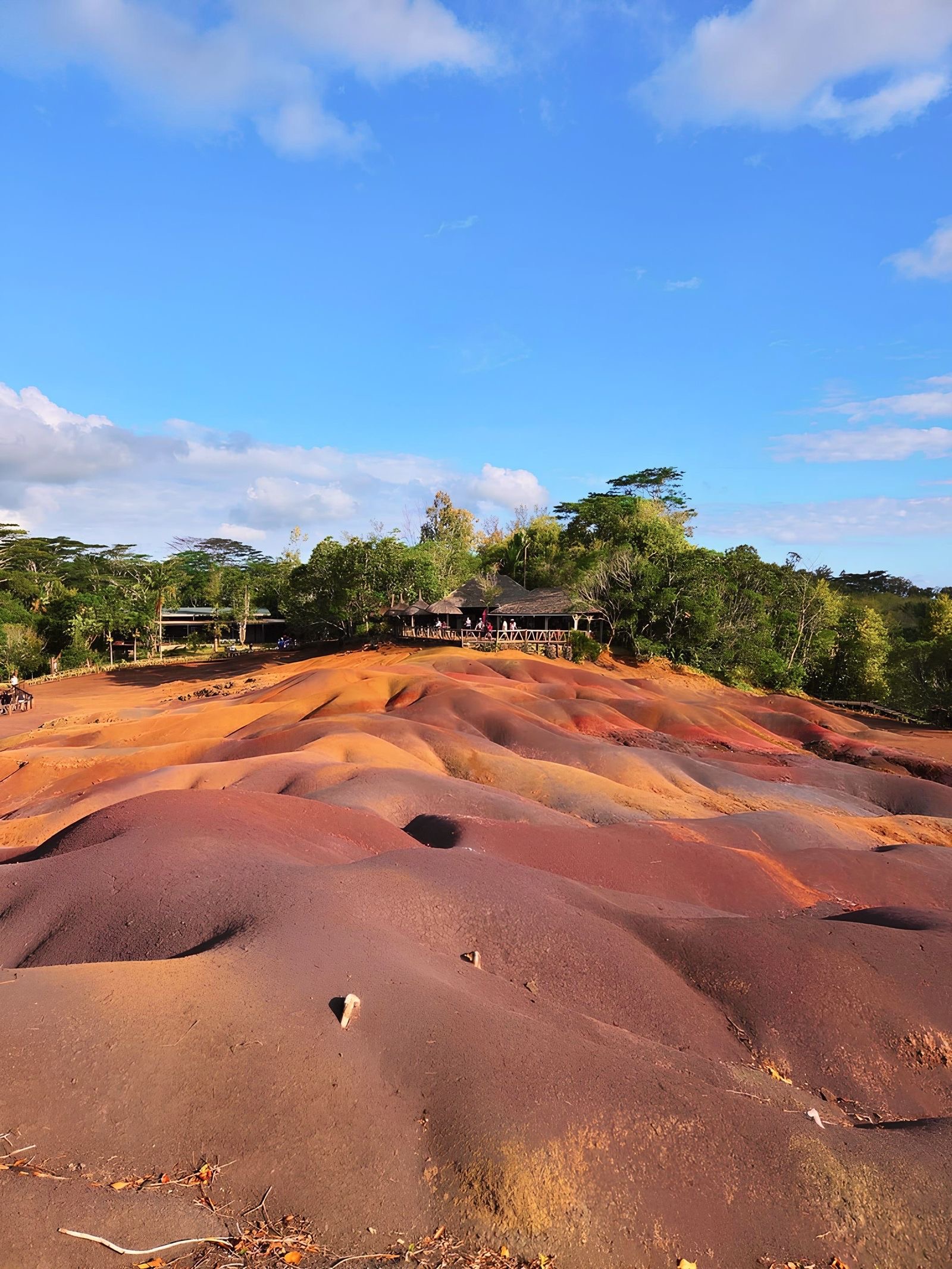
Inland, the road to Chamarel climbs through a canopy of Indian almond and traveller's palms into a landscape that feels subtropical and volcanic in equal measure. The Chamarel waterfall drops a hundred metres into a gorge so green it hurts to look at in direct sun. But it is the earth nearby that arrested us — the Seven Coloured Earths, bare dunes of volcanic soil in bands of ochre, rust, violet, and grey that refuse to mix even in rain. The geological explanation involves basalt decomposition at different temperatures. The visual explanation requires no footnote. We sat on a bench and watched the colours shift as clouds crossed the sun, and for a few minutes the island felt very old and very indifferent to our presence.
The Creole kitchen is where Mauritius holds its real biography. At a table in Chamarel, we ate a vindaye of fish — mustard, turmeric, vinegar, a heat that built slowly — and a rougaille of tomato and thyme that tasted of every cuisine that had ever passed through this island's ports: Indian, French, Chinese, African, each influence present but none dominant. The cook, a woman named Priya, told us her grandmother had worked the cane fields and her mother had cooked for the estate house, and that the recipes moved between both kitchens until nobody could say where they had started. This is the island's genius — not fusion, which implies intention, but a layering so gradual it feels geological.
We leave tomorrow, back through the cane fields to the airport, past the abandoned sugar mills whose chimneys still stand like sentinels marking a border between eras. The resort Mauritius will be visible from the plane — the lagoons, the white sand, the careful blue. But we will be thinking of the south coast, where the reef does not protect the shore and the cooking carries five histories in a single pot. The light is changing now, moving from gold to the particular rose that the Indian Ocean produces in its last hour. The cane field has turned from fire to shadow. Someone is burning brush in a neighbouring field, and the smoke is drifting east.