The Batu Caves are 272 steps of painted concrete climbing into a limestone cathedral that has been sacred to Tamil Hindus since the 1890s. We arrived at seven in the morning, before the heat and before the tour buses, and climbed alongside a family from Penang who had come for Thaipusam preparations, the father carrying a brass vessel of milk on his head steady, not spilling a drop despite the hundred and third step.
The cave at the top is cathedral-sized and lit from above by a hole in the limestone where the roof has collapsed, letting in a column of sunlight that moves across the cave floor as the morning progresses. Pigeons circled in the light. A priest was arranging flowers on a shrine dedicated to Lord Murugan, whose 42-metre golden statue we had passed on the way up, its surface catching the morning sun so hard you had to look away.
The edges of the noodles were charred in that specific way that only cast iron and indifference to time can produce.
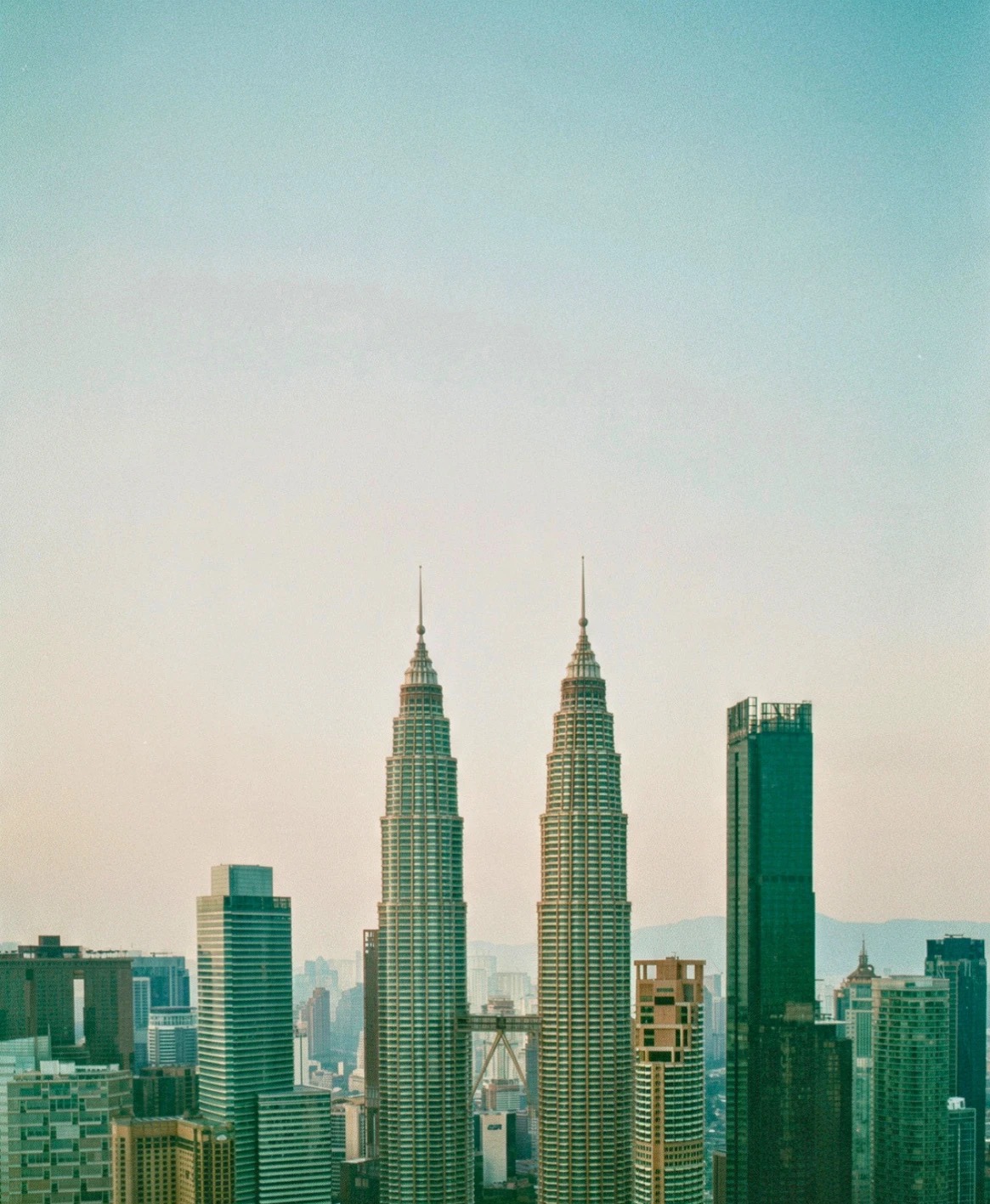
Kuala Lumpur below the caves is a city where nothing quite matches and nobody minds. The Petronas Towers, once the tallest buildings in the world, stand above a park where men play sepak takraw — a sport that involves keeping a rattan ball in the air using only feet and knees, and that looks like volleyball reimagined by a gymnast. The colonial core around Merdeka Square, where independence was declared in 1957, is a postcard of Moorish revival architecture that the British built to make their administration look less like an occupation.
We spent an afternoon in the Central Market, a 1930s Art Deco building now filled with batik, pewter, and the hum of a building that has been selling things for ninety years and still feels like a building, not a mall. A man demonstrated the art of batik painting — wax resist on cotton, each layer of colour requiring a separate application and a separate boiling — with a patience that suggested he measured time in dye baths rather than hours.
The Cameron Highlands, three hours north of KL, are where Malaysia goes to breathe. The road climbs through primary rainforest into a landscape the British planted with tea because it reminded them of something — Assam, Ceylon, their own nostalgia. The BOH estate spreads across hillsides in rows so precise they look combed, and from the café at the plantation's edge, the view is of green gradations descending into mist. We drank tea picked that morning by women who moved between the rows with a speed that made the steepness irrelevant. The air at fifteen hundred metres was cool enough for a jumper, a relief after KL's equatorial weight, and the strawberry farms along the roadside sold fruit warm from the sun and sweet enough to justify the detour entirely.
George Town, Penang, four hours north by train, is where Malaysia keeps its best food. Everyone we met agreed on this — a consensus shared, including people from Kuala Lumpur who spoke about Penang char kway teow with the reverence that Neapolitans reserve for pizza from a specific oven on a specific street. We ate ours at a hawker stall on Lorong Baru, the flat rice noodles charred in a wok that had not been washed since the 1970s, and the cook — a man in his seventies — worked the flame with a wrist action that looked like nothing and was clearly everything.
The street art in George Town is famous for a reason: it is good. Not the commissioned murals that cities use to signal creativity, but murals and wire installations that comment on the shophouse architecture they occupy. A boy on a bicycle, painted life-size on a wall, pedals into a real drainpipe. A woman reaches for a real window shutter. The art and the city share the same surface, and neither seems aware of the boundary. We walked the streets until dusk, when the mosques called and the hawker stalls lit their lamps and Penang shifted into its evening register, which is louder and oilier and possibly better than the daytime version.