The boat left Huay Xai at eight in the morning and would not arrive in Luang Prabang until the following afternoon. Two days on the Mekong in a wooden longboat with bench seats and a roof of corrugated tin. The engine hummed a note that did not change for two days. The river did the rest.
The other passengers were a mix of backpackers, a French couple who had been travelling for six months and had reached the stage where they no longer photographed everything, and three Laotian women returning from a market in Thailand with bags of clothing and electronics. The women sat in the back and played cards. The French couple read. The backpackers took turns standing at the prow looking meaningful. We sat in the middle and watched the riverbank, which presented itself in a continuous scroll of bamboo, teak, limestone cliff, and occasional villages where children stood on the bank and waved with the enthusiasm of people who had been waving at boats since before they could walk.
Two days on the Mekong in a wooden longboat with bench seats and a roof of corrugated tin. The engine hummed a note that did not change for two days.
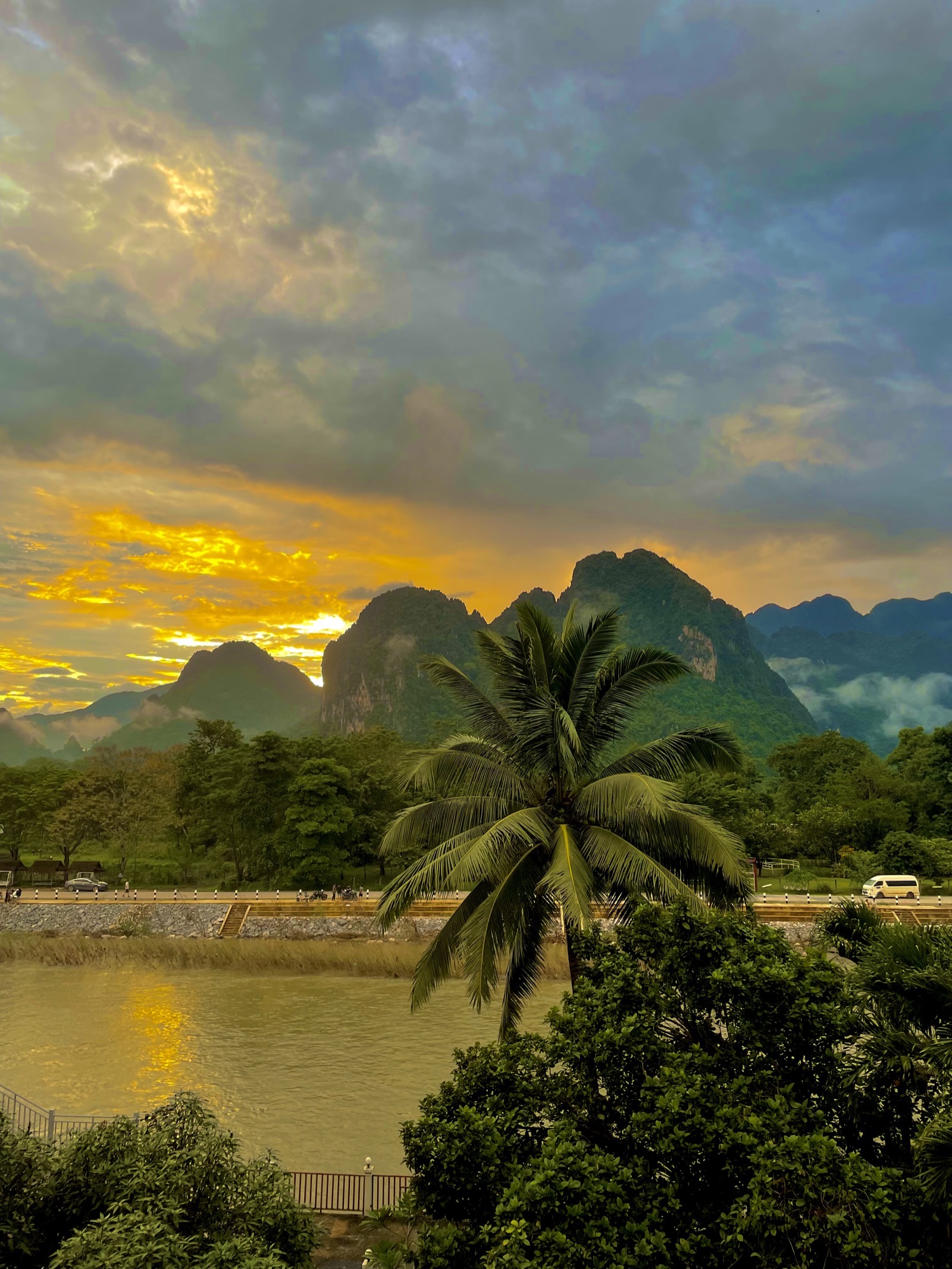
The Mekong in northern Laos bears no resemblance to the river at Saigon — wide, brown, commercial. Here it runs muscular and green and runs between mountains that rise straight from the water without the courtesy of a floodplain. The current is visible: whirlpools form behind rocks, eddies spin at the confluences of tributaries, and the boatman reads the water the way a pilot reads instruments, making constant small corrections that we only noticed because there was nothing else to watch.
We stopped overnight at Pak Beng, a town that exists primarily because the river is too dangerous to navigate in darkness. The guesthouse had a balcony overlooking the water and a menu of exactly one item — fried rice with egg — and we ate it on the balcony as the sun set behind the Lao mountains and the river turned from green to gold to black. A monk walked past on the road below, his saffron robe the last visible colour before the light went entirely.
Luang Prabang appeared the next afternoon around a bend, its temple roofs catching the sun above the tree line. We disembarked at a wooden dock and walked up a flight of steps into a town that is either the best-preserved colonial settlement in Southeast Asia or a very convincing stage set, depending on your tolerance for French bakeries in Buddhist kingdoms. The morning alms ceremony — monks walking barefoot through the streets at dawn to receive sticky rice from kneeling residents — is the most photographed event in Laos and the one most likely to make you question whether photographing it is the right thing to do. We watched from a distance and kept the camera down.
The night market on the main street sold silk scarves, mulberry paper lanterns, and a whisky infused with a cobra that stared out of the bottle with the resigned expression of a creature that had expected a different afterlife. We bought the scarves, declined the cobra, and ate dinner at a restaurant on the Nam Khan river where the menu was written in chalk and the fish had been caught that afternoon by a man who was now sitting at the next table eating the same fish prepared a different way.
On our last morning we climbed Phousi Hill at dawn, three hundred steps to a golden stupa that overlooks the confluence of the Mekong and the Nam Khan. The town below was still asleep. Mist sat on both rivers. A rooster crowed from somewhere in the market district. We sat there until the first monks appeared on the streets below, small orange figures moving with purpose between the temples, and the town began its morning ceremony of rice and silence and the morning routine of a town that has been waking up this way longer than anyone living can remember.