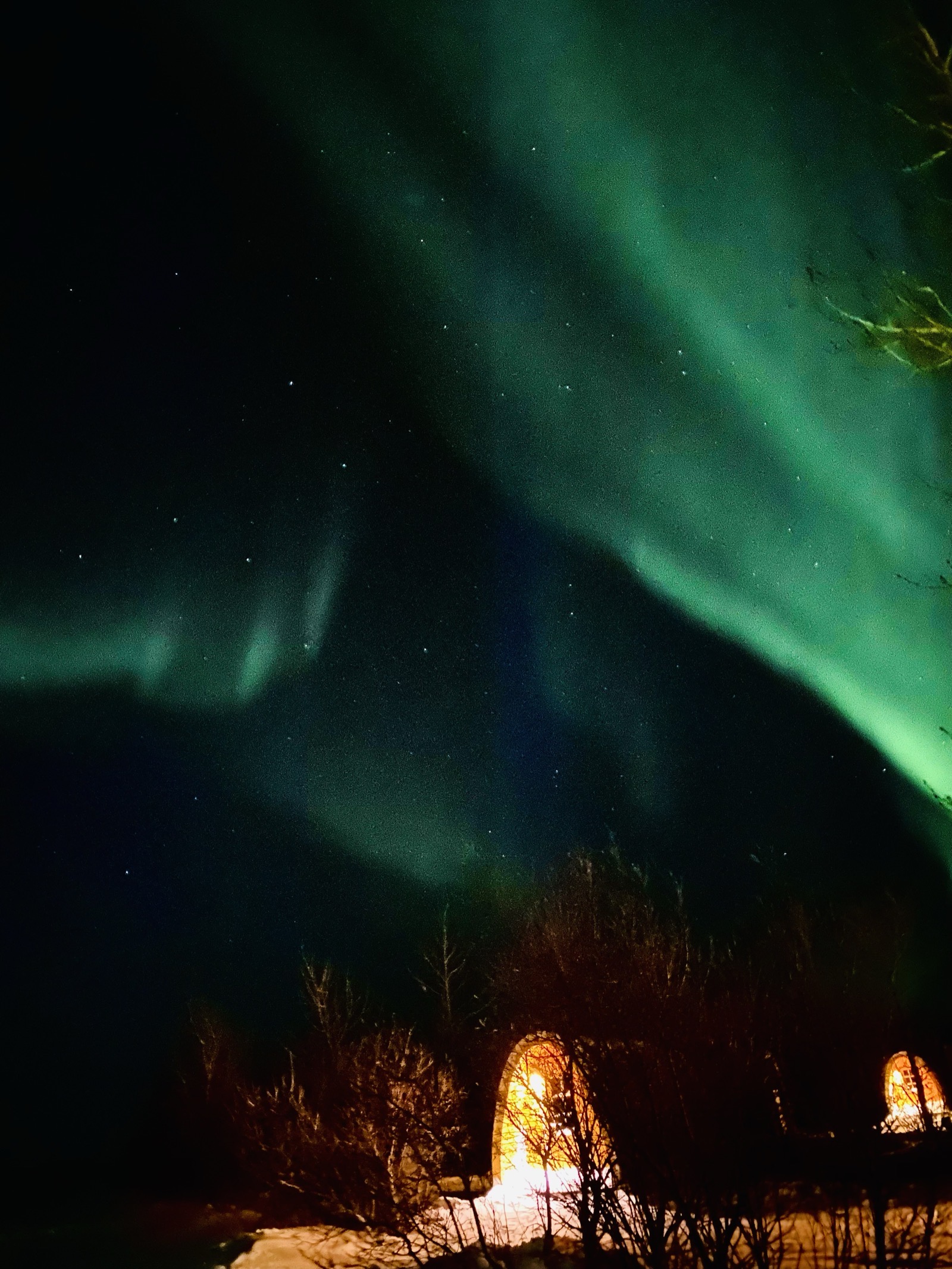
Route 1 circles Iceland the way a sentence circles a thought — returning to where it started, but changed. The ring road is 1,322 kilometres of asphalt through a landscape that hasn't decided if it's land or sea, solid or liquid, finished or still under construction. You leave Reykjavík heading north and within an hour the city is gone, replaced by a terrain that looks like the first draft of somewhere — moss over lava, steam from fissures, horses standing in wind that would flatten anything less stubborn. The road is the only constant. Everything beside it is negotiable.
We drove it in September, when the summer tourists had left and the winter tourists hadn't arrived. The north coast was ours. Akureyri, the second city, had the energy of a village that had been promoted beyond its ambitions — a good bookshop, a botanical garden at sixty-six degrees north, and a church that watches over the fjord like a lighthouse with opinions. The whale watching from Húsavík was cold, wet, and extraordinary: a humpback surfaced thirty metres from the boat and exhaled a breath that smelled of krill and ocean floor. The guide cut the engine and we drifted in silence while the whale circled beneath us, a dark shape the size of a bus moving with a patience that made our itinerary look absurd.
Beautiful is the wrong word. Iceland is unfinished — glaciers, volcanoes, lava fields that cracked open last year.
The east coast is the section most travellers rush. This is a mistake. The fjords here are narrow and deep, the fishing villages wedged between mountains and sea with the geometry of afterthoughts. At Seyðisfjörður, a rainbow-painted road leads down to a harbour where a ferry arrives from Denmark once a week, delivering supplies and the occasional confused tourist expecting Reykjavík. We ate langoustine soup in a converted fish factory and watched the clouds rearrange themselves over the fjord in formations that changed faster than weather apps could track.
The Westfjords are not on the ring road and most people skip them. This is a gift. The roads are gravel. The fjords are deep. The villages have populations in double digits. Ísafjörður, the capital of this emptiness, has a French bakery run by a man who arrived twenty years ago and never found a reason to leave. His croissants are, improbably, better than most you'd find in Bordeaux. We drove the Látrabjarg cliffs at the westernmost point of Europe, where puffins nest by the thousands on ledges so narrow the birds look like they're queuing for a bus that runs along the cliff face.
Landmannalaugar, in the interior, is Iceland's psychedelic heart — rhyolite mountains in pink, yellow, green, and black, striped like geology's mood ring. The hot spring at the trailhead is free, outdoor, and surrounded by lava. You sit in water heated by the planet's core and watch steam rise into air cold enough to see your breath. The contrast is so extreme it feels deliberate. We hiked two hours into the Laugavegur trail, past obsidian fields that crunched underfoot like broken glass, and turned back only because the weather insisted — a wall of fog rolling in from the glacier with the authority of something that owned the place.
Beautiful is the wrong word for Iceland. It is unfinished. Glaciers, volcanoes, lava fields that cracked open last year. The mid-Atlantic ridge runs through the country like a spine, pulling Europe and North America apart at two centimetres a year, and you can feel it — not literally, but in the way the ground shifts register, in the sulphur smell, in the cracks that open in lava fields overnight. You visit it the way you'd visit a construction site: with hard shoes and respect.