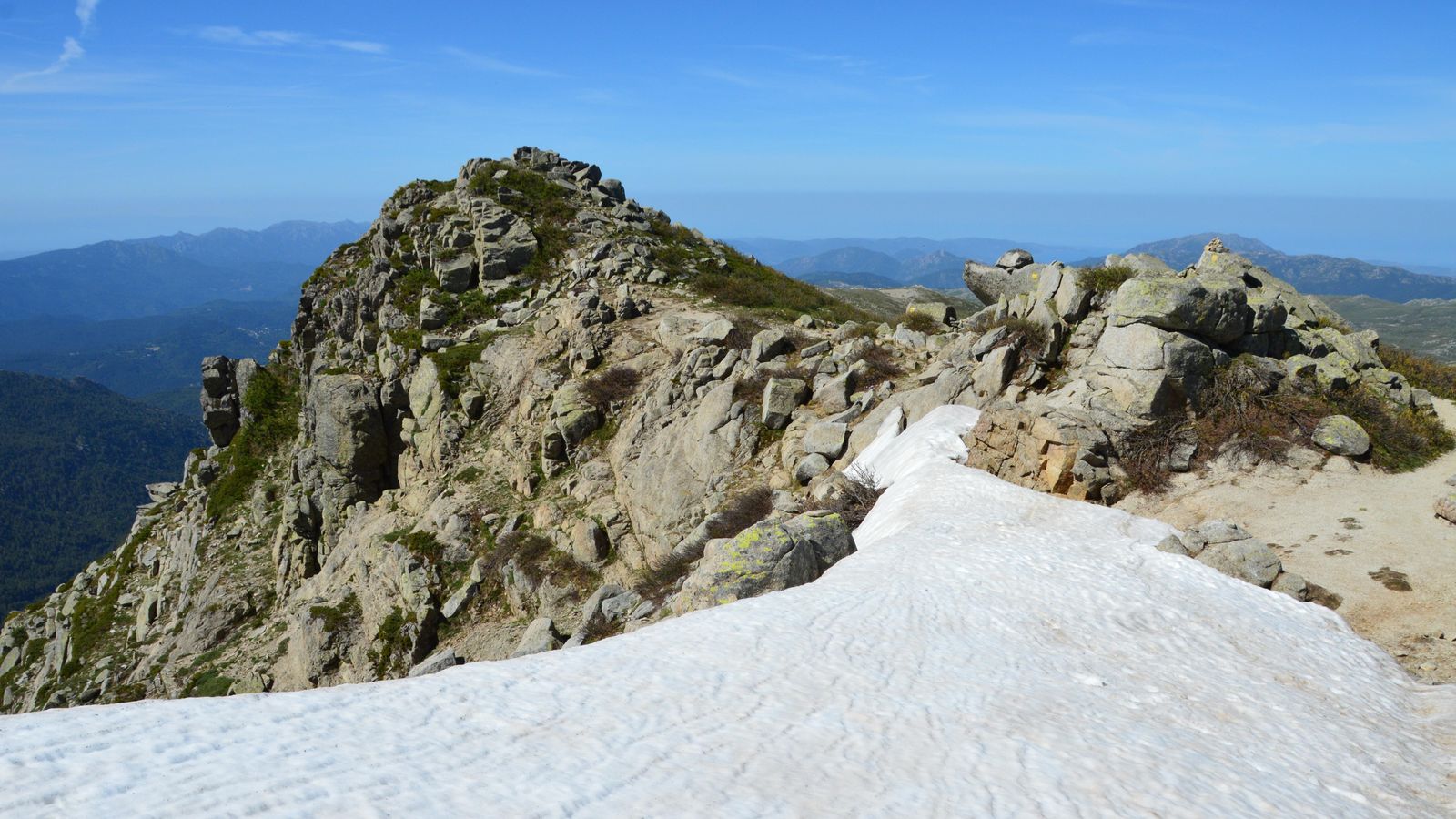
The GR20 begins at Calenzana, a village in the Balagne that smells of maquis and diesel, and from the first step uphill it makes its intentions clear: this is a negotiation with granite, altitude, and the particular stubbornness of a Mediterranean island that has been resisting visitors since the Genoese. The path climbs through scrub oak and chestnut forest for two hours before opening onto a ridge where the wind hits you with a force that suggests a personal grievance.
We carried everything. Tent, sleeping bag, stove, five days of food. The pack weighed twenty-two kilos and it took three days to stop noticing it and another three to start resenting it again. The refuges along the route offer floor space and a hot meal — typically a pasta with wild boar sauce served by a guardian whose hospitality is genuine but whose accommodation standards are calibrated to exhaustion rather than comfort. You eat standing up. You sleep on a wooden platform. You are grateful for both.
The GR20 is its own syllabus.
The high sections are where the GR20 earns its reputation as the toughest long-distance trail in Europe. Between Refuge de Ciottulu and Refuge de Manganu, the path crosses a cirque of polished granite slabs that require both hands and a tolerance for exposure. Chains are bolted into the rock at the worst sections, and the word 'worst' is earned — a slip here becomes a geometry problem with a bad outcome. Lucas climbed ahead and I followed his route choices, and for three hours neither of us spoke because speaking required attention we could not spare.
Corsica from the ridgeline is two islands stacked vertically: the coast below, blue and indolent, and the interior above, all granite and pine and a wind that changes direction without warning. On the fourth day we crested a col and saw both coasts simultaneously — the Tyrrhenian Sea to the east, the Ligurian to the west — and the island appeared as what it is: a mountain range that happens to be surrounded by water.
The swimming holes are the GR20's secret currency. After six hours of climbing in thirty-degree heat, a pool of snowmelt in a granite basin at 1,800 metres becomes the reason you continue. We swam in three of them, each cold enough to stop conversation, and emerged clean and stupid with endorphins and continued up the next ridge and continued up the next ridge feeling invincible, which lasted about twenty minutes.
The descent into Vizzavona, the midpoint, felt like arriving in a different country. A train station. A restaurant with tablecloths. Cold beer. We sat on the terrace of a gîte and watched the afternoon light move through the laricio pines — Corsican pines that grow nowhere else, straight as columns, their bark smelling of vanilla in the heat — and debated whether to continue or to stay. We continued. The southern half of the GR20 is technically easier and aesthetically different: more forest, fewer chains, a landscape that rewards walking rather than climbing.
On the last day, descending through chestnut groves to Conca, the sea appeared through the trees for the first time since the north. The finish is anticlimactic by design — a small village, a bar, a sign that says 'GR20 Sud' — and this seemed right. A trail that difficult should end quietly. We drank a Pietra, the Corsican chestnut beer, and did not say much.