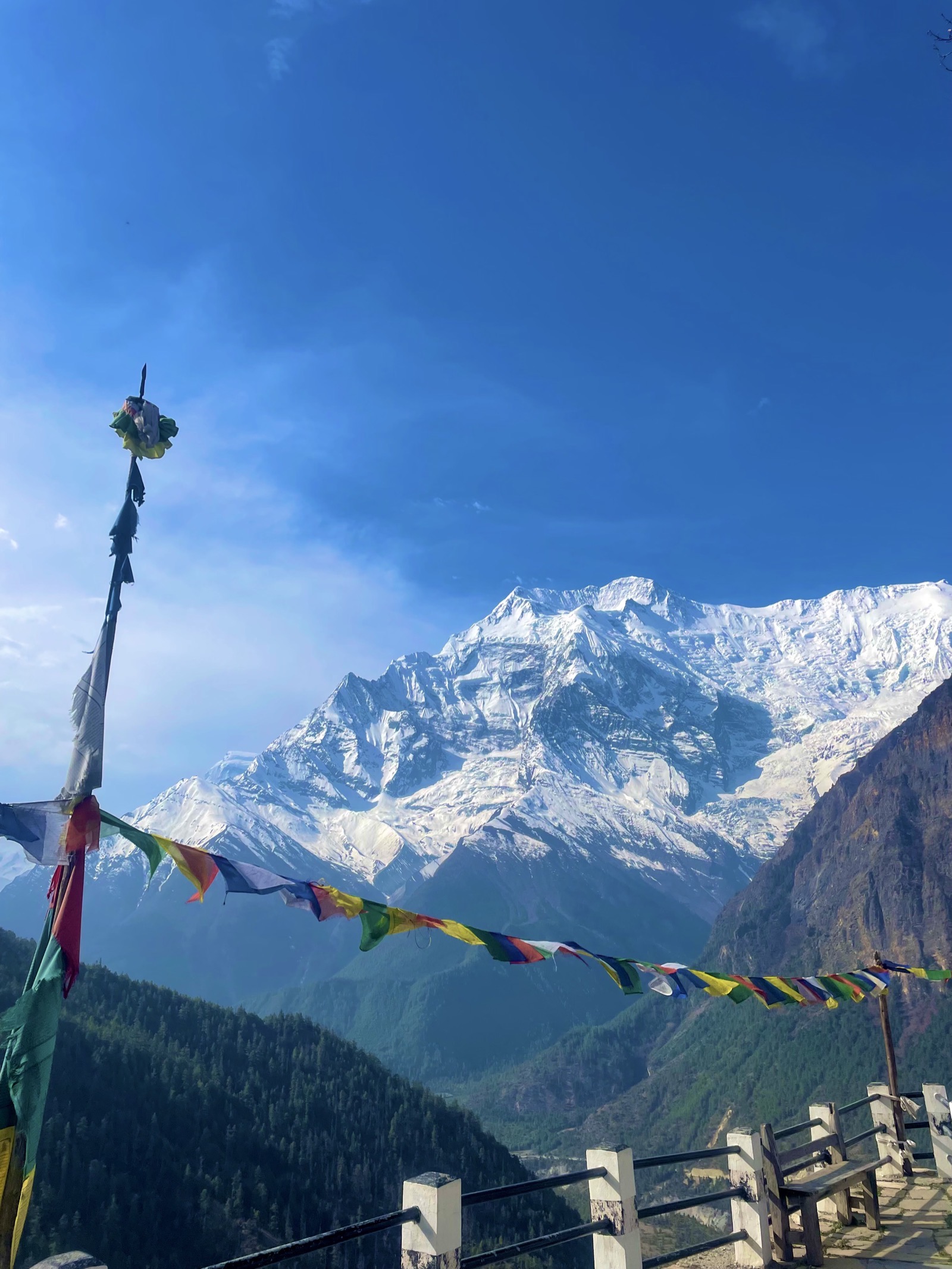
The Annapurna Circuit reads less like a hike than a curriculum. You start in rice paddies at 800 metres and end at Thorong La at 5,416, and somewhere between the two your idea of endurance reorganises itself entirely. The permit costs thirty dollars. The education is free. The circuit takes between twelve and twenty days depending on your pace and your willingness to be honest about altitude, and every guidebook will tell you not to rush. The guidebooks, for once, are right.
We began in Besisahar in October, when the post-monsoon clarity turns the mountains into something you can almost touch. The first three days are subtropical — leeches, suspension bridges, waterfalls that thunder into gorges so deep the spray never reaches you. The guesthouses serve dal bhat twice a day, and the porters carry loads that would embarrass a pack mule, and the rhythm of the trail is the rhythm of Nepal itself: slow, certain, unimpressed by your schedule. In Jagat, a village clinging to a gorge wall, a woman hung laundry on a line stretched between two stone houses while her children did homework on the guesthouse porch. The river below was a grey torrent of glacial melt, and the sound of it was the sound of every night for the first week — constant, percussive, close enough to feel in the floorboards.
The pile of rocks is not the point. Getting there slowly enough to understand the question is.
By Manang, at 3,500 metres, the landscape has changed three times. The subtropical gorge has given way to dry Tibetan plateau — stone walls, flat-roofed houses, yak herds grazing on slopes the colour of straw. The air thins. The prayer flags multiply. We spent an acclimatisation day walking to the Ice Lake above the village — a bowl of turquoise water at 4,600 metres where the reflection of Annapurna III was so still it looked painted. Lucas, who had been counting his breath for three days, stopped counting. Altitude had done what meditation couldn't. In the evening, back in Manang, we sat in a teahouse watching a Nepali film on a television powered by a solar panel, drinking ginger lemon honey — the circuit's unofficial currency — while the temperature outside dropped to minus five.
Thorong La day begins at 3 AM. The headlamp picks out the boots of the person ahead. The air is so thin that every ten steps require five breaths. The teahouse at High Camp, where we spent the night at 4,925 metres, was a plywood box rattling in the wind, the sleeping bags frosted at the edges by morning. The pass at dawn is not beautiful in any postcard sense — it is cold, wind-scoured, marked by prayer flags so tattered they've become the wind itself. But standing there, with Annapurna behind and Dhaulagiri ahead, you understand why people walk for twelve days to reach a pile of rocks. The pile of rocks is not the point. Getting there slowly enough to understand the question is.
The descent to Muktinath is three thousand metres in a single day. Your knees learn a new vocabulary. The trail switches from frozen scree to dust in the space of an hour, and the Kali Gandaki valley opens below like a door into a different country — dry, wind-blasted, the deepest gorge on earth though it doesn't look like one from above. The temple at the bottom has sacred flames burning from natural gas vents beside holy water from 108 stone spouts. Hinduism and Buddhism share the site without explanation. A sadhu in orange sat cross-legged by the eternal flame, eyes closed, while trekkers in Gore-Tex filed past comparing altitude scores on their watches. Some things don't require a thesis. They require a visit.