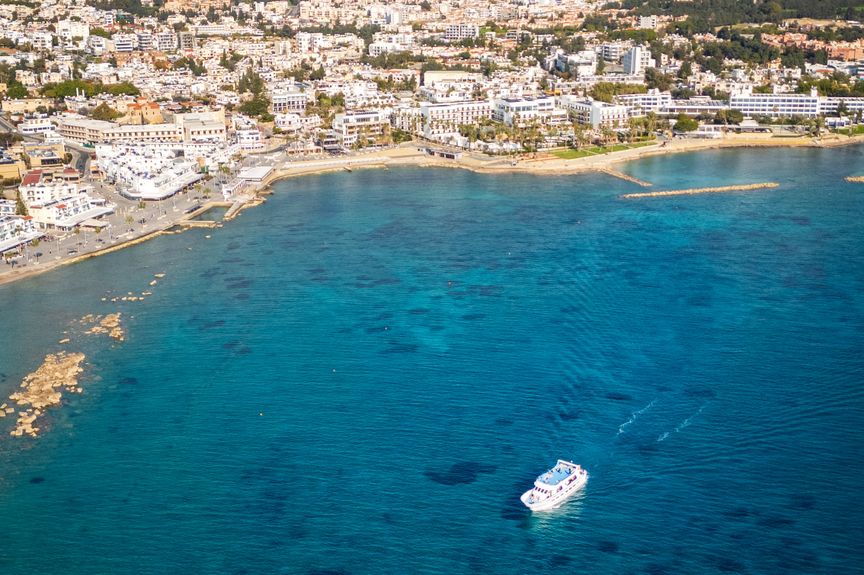
Cyprus has two speeds: the coast, where time is measured in sunsets and the ruins have been waiting since the Bronze Age, and the mountains, where the monasteries keep a different clock and the pine forests smell of resin and rain that fell an hour ago. We landed in Paphos in November, when the tourist season was over and the island had exhaled — the beaches were empty, the restaurants had their best tables free, and the Mediterranean was still warm enough to swim in, which felt like a secret the brochures had failed to mention.
Paphos is an open-air museum that does not charge admission. The mosaics at the House of Dionysus — Roman, second century, preserved under rubble from ancient earthquakes and now under modern roofing — are so detailed that the tesserae look like pixels in a screen resolution no one has yet surpassed. Dionysus rides a leopard. Orpheus charms the animals. Theseus fights the Minotaur. Each scene is rendered with a confidence that suggests the artist knew the work would last two thousand years and composed accordingly.
The mosaics look like pixels in a screen resolution no one has yet surpassed.
Petra tou Romiou — Aphrodite’s Rock — is a stack of white boulders in the surf where, according to myth, the goddess of love came ashore. The beach is pebble, not sand, and the water is cold enough to argue with. But the light at sunset turns the rocks to the colour of honey, and the sea turns to gold, and you understand why someone, a long time ago, decided that beauty must have been born here, because the evidence was difficult to argue with.
The Troodos Mountains are an hour inland and a world apart. The roads climb through pine forests into villages where the houses are stone and the churches are older than most European capitals. The Church of Agios Nikolaos tis Stegis, a UNESCO site, has frescoes from the eleventh century painted directly onto the walls in colours that have not faded because the mountain air keeps its own humidity. A caretaker unlocked the door, let us stand in the half-dark for ten minutes, and locked it again when we left.
We ate meze in Omodos, a wine village in the Troodos where the taverna owner brought twenty-three plates we had not ordered and the halloumi was grilled on charcoal that smelled of the grapevine cuttings it was made from. The commandaria — Cyprus’s sweet wine, the oldest named wine in the world, ordered by the Crusaders and shipped to the courts of Europe — was poured in small glasses and tasted of sun-dried grapes and eight centuries of nobody changing the recipe.
We drove back to Paphos through the Troodos foothills as the sun dropped behind the ridge. The commandaria bottle rolled gently on the back seat. The coast appeared below, the harbour lights already on, the sea dark and flat beyond them. November in Cyprus smells of pine resin and grilled halloumi and the last warm evenings before the Mediterranean remembers that winter exists.