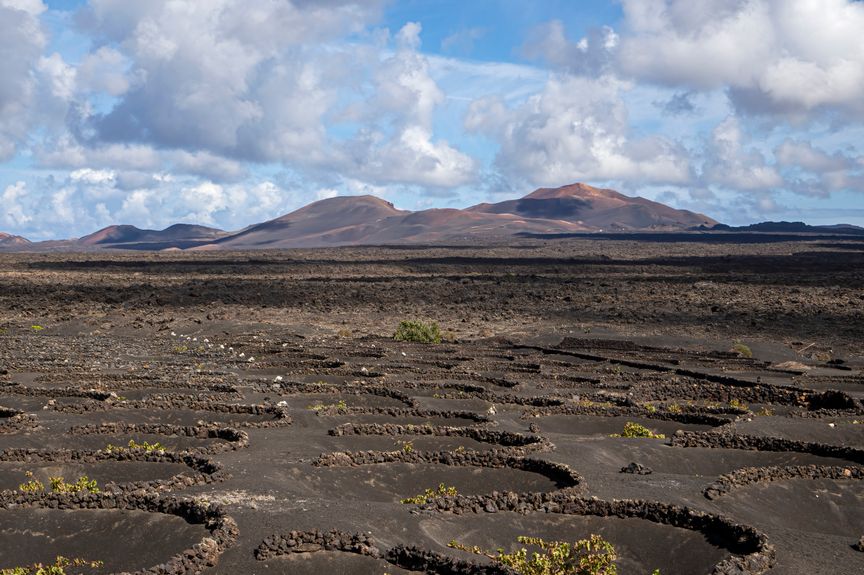
Lanzarote looks like the earth forgot to finish. The lava fields stretch to the coast in frozen waves of black rock, the volcanoes rise from the plain like geometry homework, and the sky — enormous, cloudless, African in its weight — presses down on everything with the patience of something that has been pressing for three hundred years. The eruptions of 1730–1736 covered a quarter of the island and the landscape has not recovered. It has not tried. This, we understood, is the aesthetic.
César Manrique, the artist and architect who spent his life making sure Lanzarote did not become another concrete coast, is the reason the island looks the way it does. There are no billboards. The buildings are white and low. The tourist developments that might have happened were stopped, argued against, and replaced with something better — a volcanic cave turned into a concert hall, a lava tube turned into a gallery, a cactus garden planted in an old quarry where the geometry of the plants matches the geometry of the stone. Manrique died in 1992 and the island has kept its promise to him, which is more than most places manage.
The grill has no fuel. The volcano provides.
Timanfaya National Park is the centre of the volcanic field, and the bus tour across it is the strangest thirty minutes of driving we have done. The road crosses a landscape that looks like another planet — reds, blacks, ochres, and a silence so complete that the engine of the bus sounds like an intrusion. At the restaurant, they grill fish over volcanic heat that rises naturally from the ground. The grill has no fuel. The volcano provides. This seemed, to us, a reasonable arrangement.
Fuerteventura, a short ferry ride south, is Lanzarote’s calmer sibling. The beaches are wide and golden and the wind is constant, which explains the surfers and the windmills and the particular lean of the palm trees. The village of Betancuria, the old capital, sits in a valley that the wind cannot reach, and the silence there is of a different quality — sheltered, warm, and scented with the wild herbs that grow in the barranco.
We ate papas arrugadas — wrinkled potatoes boiled in seawater and served with mojo rojo and mojo verde — at a bodega in the wine region of La Geria, where the vines grow in individual pits dug into the volcanic ash, each one shielded by a semicircular wall of lava stone. The wine is Malvasía, dry and mineral, and it tastes like the landscape looks: stark, honest, and more complex than you expected.
We caught the ferry back from Fuerteventura on a morning when the wind had dropped for the first time all week. The sea was flat. The island shrank behind us into a low line of sand and dune. Ahead, the volcanoes of Timanfaya were already visible against the sky, dark and patient, the way they have been since the eruptions stopped and the island decided that nothing needed to grow back.