At Gellért, the water remembers the building. It rises through limestone at forty-three degrees and fills an Art Nouveau hall where the tiles are the green of old pharmacy bottles and the steam softens every edge until the room looks like a watercolour of itself. We arrived early, before the tour groups, when the only sound was water entering the pool through lion-headed spouts and the slap of wet feet on mosaic floors. An elderly man swam laps with a precision that suggested decades of practice in this exact basin. The thermal baths of Budapest are not spas in the leisure sense — they are civic rooms, as deliberate in their social function as a library or a courthouse.
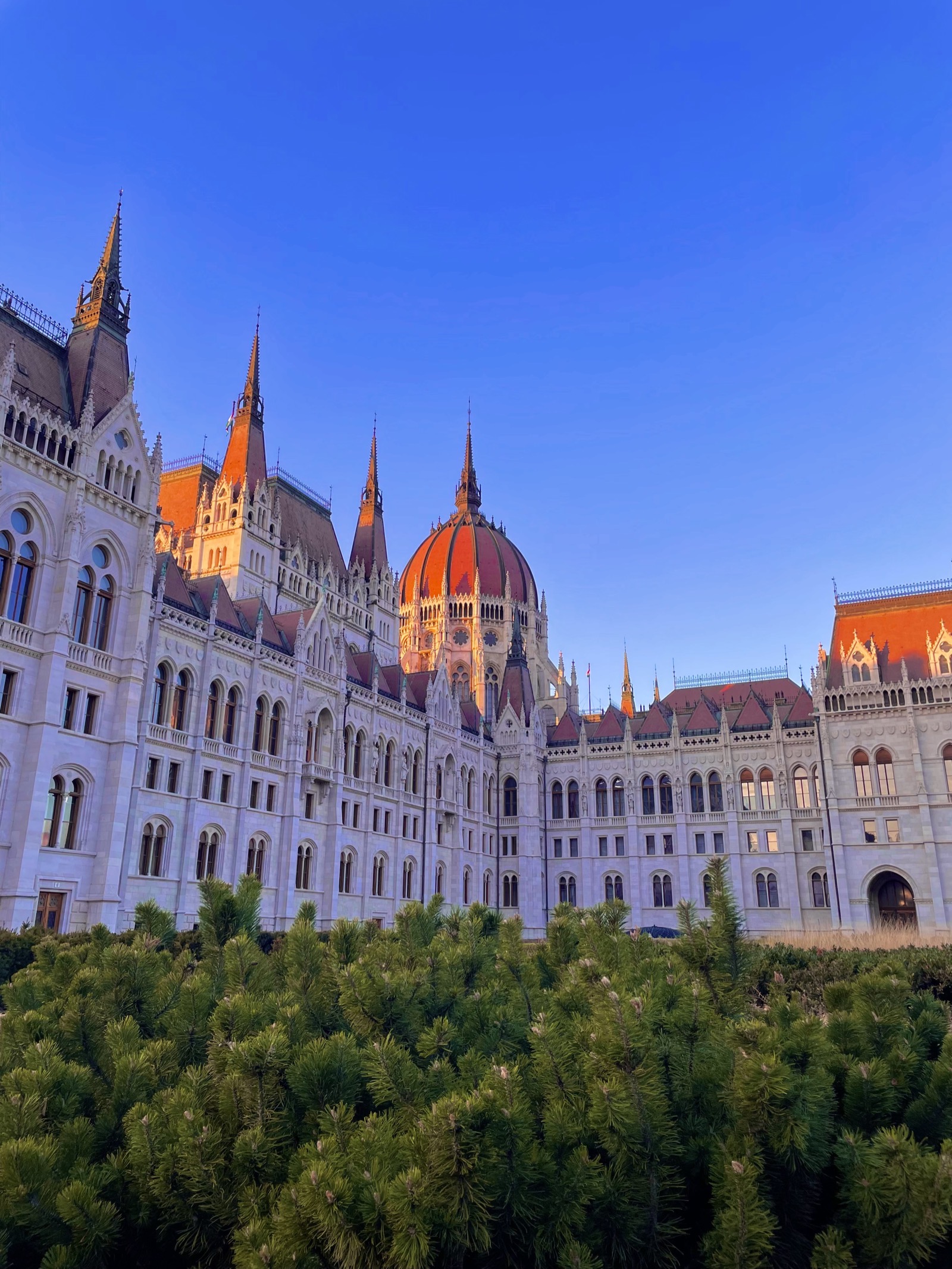
The city splits along the river like a book left open. Buda's hills hold the Castle District and its weight of history; Pest sprawls flat and forward, its grand boulevards radiating from the Parliament like the spokes of an argument about modernity. We walked the Jewish Quarter on a Tuesday evening, past the ruin bars that have colonised the courtyards of buildings that once waited for demolition. Szimpla Kert, the first and most imitated, has the energy of a place that knows it invented a form — mismatched furniture, plants growing through bathtubs, a cinema screen propped against a wall where plaster is peeling with what looks like intention. The ruin bar is Budapest's particular contribution to nightlife: a refusal to renovate, elevated to an aesthetic.
The thermal baths of Budapest are not spas in the leisure sense — they are civic rooms, as deliberate in their social function as a library or a courthouse.
The Central Market Hall on Fővám tér is the city's stomach — a neo-Gothic cathedral of iron and glass where the ground floor runs on paprika, foie gras, and sausage links hanging from butchers' hooks like garlands. We bought smoked paprika from a vendor who distinguished between eight grades by colour and heat the way a sommelier grades vintages. Upstairs, the lángos stalls served deep-fried flatbread slathered in sour cream and grated cheese — Hungary's answer to the question of what constitutes street food — and we ate it standing up, which felt like the correct posture for something that unapologetic. The market closes early; by two o'clock the vendors were folding their awnings, and the building returned to being architecture.
Three hours northeast, the road narrows into the Tokaj wine region, where the Bodrog and Tisza rivers meet and the autumn mist that rises from their confluence is responsible for one of the world's great wines. Tokaji Aszú is made from grapes shrivelled by noble rot — botrytis — and the resulting wine is amber, honeyed, and as complex as anything we have tasted. At Disznókő, the cellar tunnels stretch beneath volcanic soil, and the winemaker pulled a glass of six-puttonyos from a barrel that had been resting in darkness for four years. The taste carried apricot, beeswax, and something saline underneath the sweetness that we could not place.
We drove back through the Zemplén Hills at dusk, when the vineyards on the south-facing slopes caught the last sun and turned the colour of the wine they would eventually produce. Hungary moves between registers — the formality of its baths, the improvisation of its bars, the patience of its cellars — with a fluency that suggests long practice at holding contradictions. At the Széchenyi baths on our last morning, we watched a chess game played in chest-deep water, the wooden board floating on a foam platform, the players' concentration absolute. The steam rose around them like punctuation, marking pauses in a conversation conducted entirely in silence.
What we carried home was not the grandeur of the Parliament dome or the sweep of the Chain Bridge at night, though both are undeniable. It was the smaller calibrations — the temperature of the water at Rudas after dark, the exact amber of a Tokaji held up to a cellar's single bulb, the sound of a ruin bar at the hour when the courtyard fills but the noise has not yet crossed into chaos. Budapest rewards you for sitting still. The baths, the wine, the ruin bars — everything here works best when you stop trying to keep up and just let the water do its job.